On 8 May 2025, Cardinal Robert Francis Prevost made history as the first U.S.–born pontiff when he was elected Pope Leo XIV. His journey—from Chicago parish life to mission challenges in Peru, from leading the worldwide Augustinian Order to guiding global bishop appointments in the Vatican—reflects a lifetime of service, compassion, and bridge-building. Now, as the 267th Bishop of Rome, he carries that spirit into a papacy marked by unity, social justice, and a pastoral heart for every corner of the world.

I. Chicago Beginnings and the Seed of a Vocation
Family Roots and Parish Life
Born on 14 September 1955, Robert Prevost grew up in a close-knit Polish-American family in Chicago’s Brighton Park neighborhood. From altar serving at age eight to singing in the choir, young Robert absorbed the rhythms of parish life. His parents, Louis and Mildred, instilled both discipline and compassion, guiding him into community food drives and catechism teaching.
Academic Curiosity
At Loyola Academy, he excelled in mathematics and philosophy. Summer retreats led by Augustinian friars planted the idea of religious life. By the time he graduated from Villanova University with a mathematics degree in 1977, Prevost had already volunteered to tutor inner-city youth and felt the pull of a deeper vocation.

II. Embracing Augustinian Spirituality
Entering the Order
In 1977, Robert Prevost responded to a deepening call and entered the Order of St. Augustine, drawn by its unique blend of communal life and contemplative prayer. His year-long novitiate in Mendham, New Jersey, introduced him to the heart of Augustinian living: daily Liturgy of the Hours prayed in common, shared meals around a simple refectory table, and weekly periods of silent meditation on the Rule of St. Augustine. Under the guidance of his novice master, Fr. John O’Malley, he learned how the Augustinian charism unites intellectual inquiry with pastoral service, preparing friars to engage both the mind and the heart in ministry.
Vows and Studies
- 1978: After a year of discernment, he professed his simple vows, committing to communal poverty and obedience. This first profession marked his official entry into the religious family.
- 1979–1981: During his apostolic formation, he balanced classroom study with hands-on work in local parishes, assisting with youth ministry and adult education programs. His sense of solidarity grew as he lived in community with brothers from diverse backgrounds.
- 1981: He made his solemn (perpetual) profession, embracing the full Augustinian commitment to chastity, radical simplicity of life, and shared governance.
- 1981–1982: Back in Chicago, he completed his theological coursework at the Catholic Theological Union, delving into Scripture, Patristics, and pastoral theology. He served weekend liturgies for migrant communities, honing his fluency in both English and Spanish.
Doctorate in Canon Law
Following ordination in June 1982, Fr. Prevost was sent to Rome for advanced studies at the Pontifical University of St. Thomas Aquinas (Angelicum). Over the next three years, he pursued a Doctorate in Canon Law, focusing his dissertation on “Communal Governance in Religious Orders”. His research examined:
- The Role of Chapter Meetings: How provincial and general chapters balance authority and fraternity.
- Application of the Rule of Augustine: Practical implementations of the Augustinian Rule across different cultures.
- Synodal Decision-Making: Early models of communal consultation that later informed the Second Vatican Council’s vision of Church governance.
Living at the Angelicum, he joined daily community Mass, academic seminars with leading canonists, and informal gatherings in the friars’ garden—experiences that sharpened both his legal acumen and his pastoral sensibility. By the time he completed his doctorate in 1985, Robert Prevost had not only mastered the intricacies of Church law but also embodied the Augustinian ideal of “unity through diversity,” ready to serve the global Church with both mind and heart.
III. Mission to Peru: A Decade of Witness (1985–1998)

Chulucanas: Stepping into Danger
At 30, Fr. Prevost volunteered for mission work in Chulucanas, Peru—a region where political violence posed daily risks. He set up literacy classes, taught sustainable farming techniques, and organized youth sports leagues to keep children away from conflict.
Trujillo: Local Formation and Pastoral Care
-
Later based in the coastal city of Trujillo, he served as:
- Prior of the Augustinian community
- Professor at the major seminary, teaching theology and canon law
- Judicial Vicar, handling marriage tribunals
His willingness to hike into remote villages, repair church vehicles himself, and share meals with families in poverty earned him the affectionate title “Padre de los Pobres” (Father of the Poor).

IV. Leading the Augustinians Worldwide (1999–2013)
Provincial Superior
Back in the U.S., he was elected Provincial Superior in Chicago (1999–2001). He championed psychological support for seminarians and launched intercultural immersion programs, boosting vocations by over 50%.
Prior General in Rome
In 2001, Prevost became Prior General, leading some 2,500 Augustinian friars across five continents. He:
- Convened the first multilingual “Synod of Unity” online, linking English, Spanish, and Italian communities.
- Expanded missions in Africa and Asia.
- Fostered partnerships with lay movements for poverty relief.
He combined a consultative leadership style with firm commitment to Augustinian values of unity and charity.
V. Shepherding Chiclayo: Episcopal Ministry (2014–2023)
Apostolic Administrator & Bishop
Pope Francis entrusted him with the Diocese of Chiclayo in November 2014. Ordained bishop that December, he became the permanent Bishop of Chiclayo in 2015, adopting the motto “In Illo uno unum” (“In the One, we are one”).
Pastoral Priorities
- Expanded social services: soup kitchens, flood relief projects, family support.
- Strengthened clergy formation: ongoing retreats, peer mentoring, and lay collaboration.
- Advocated for Venezuelan refugees and spoke out against corruption and violence.
Under his leadership, the diocese became a model of integral pastoral care, balancing faith, education, and social action.
VI. Vatican Prefect & Cardinalate (2023–2025)
Prefect of the Dicastery for Bishops
In January 2023, Prevost took on one of the Church’s most influential roles, overseeing bishop appointments worldwide. He introduced listening sessions in local churches to gather broader input.
Created Cardinal
That September, he was made Cardinal-Deacon of Santa Monica. His selection as Cardinal-Bishop in early 2025 placed him among the senior advisors to the Pope and positioned him as a key figure in Church governance.
VII. Election as Pope Leo XIV
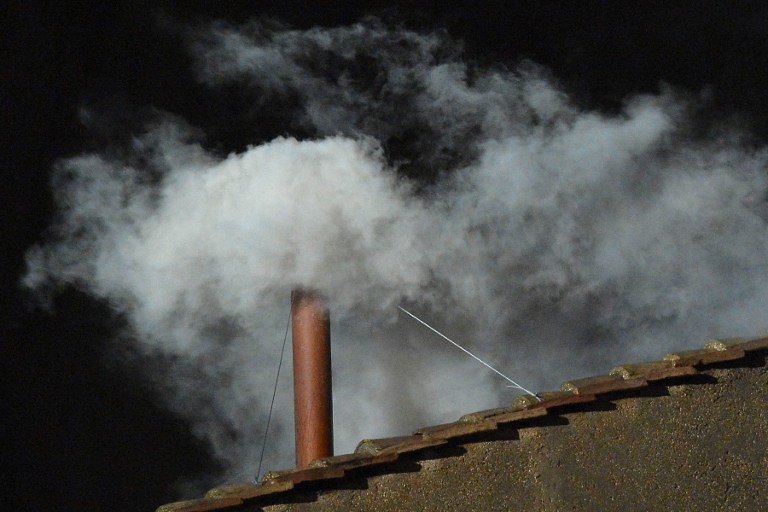
When Pope Francis’s papacy concluded, Prevost was elected on the sixth ballot of the conclave held in May 2025. Choosing the name Leo XIV linked him to:
- St. Leo the Great, defender of Rome’s faith.
- Pope Leo XIII, whose encyclical Rerum Novarum championed workers’ rights and social justice.
His first words, “Peace be with all of you!”, and his embrace of traditional papal attire signaled both continuity and renewal.
VIII. Papal Vision and Early Initiatives
Unity Through Synodality
Pope Leo XIV envisions the Church as a listening community where every baptized member shares responsibility for its mission. Building on the synodal reforms initiated by his predecessors, he has committed to a “deepening of the Synodal Path” across all dioceses. This means establishing permanent Diocesan Synodal Councils composed of clergy, religious, and lay experts in theology, social outreach, youth ministry, and family life. These councils meet quarterly to review pastoral challenges—such as parish closures, catechetical programs, and social services—and to submit recommendations directly to the local bishop. Twice a year, bishops forward a synthesis of these diocesan synodal reports to the Vatican’s Secretariat for Synodality, ensuring that grassroots insights inform universal Church discussions.
To foster genuine dialogue, Leo XIV encourages small-group listening sessions in parishes, where facilitators guide participants in reflecting on Scripture, sharing personal faith experiences, and discerning needs in their communities. These sessions produce “Letters of Witness”—brief statements summarizing key aspirations and concerns—which are posted openly in parish halls and uploaded to an online Synodal Portal. By promoting transparency and reciprocal listening, the Pope hopes to break down clerical–lay barriers, cultivate co-responsibility, and embody the biblical principle that “all of you are one in Christ Jesus” (Galatians 3:28).
- Energy Conservation: Conduct energy audits of church facilities, install LED lighting, and consider renewable sources like solar panels for parish halls.
- Water Stewardship: Encourage water-saving fixtures, rainwater harvesting for parish gardens, and community workshops on watershed protection.
- Waste Reduction: Promote zero-waste liturgies—using reusable vessels at the altar, composting flower trimmings, and eliminating single-use plastics at events.
- Biodiversity Projects: Establish or restore parish gardens, plant native trees, and collaborate with local environmental NGOs on habitat restoration.
- Education & Advocacy: Host monthly “Eco-Catechesis” sessions linking Scripture passages (e.g., Genesis creation narratives, Laudato si’) to daily care for our common home.
Beyond parish-level efforts, Leo XIV has convened an annual Global Ecological Congress at the Vatican, bringing together Church leaders, scientists, farmers, and youth activists to share best practices. By integrating prayer, study, and action, the Season of Creation aims not just to raise environmental awareness but to transform the daily habits of the faithful into tangible expressions of Gospel care for all creation.
Global Faith Forum
In Spring 2026, Rome will host the inaugural Global Faith Forum, an unprecedented summit convened by Pope Leo XIV to foster interreligious collaboration on pressing humanitarian and environmental challenges. The Forum will gather heads of major world religions—Christian, Muslim, Jewish, Hindu, Buddhist—as well as secular moral leaders and youth representatives. Over five days, participants will engage in:
- Plenary Dialogues: Focused on shared values of peace, human dignity, and care for creation, these sessions aim to draft a joint declaration on ethical guidelines for new technologies and environmental stewardship.
- Working Groups: Smaller, topic-specific groups will design collaborative initiatives—such as interfaith refugee camps, cross-religion educational curricula, and joint tree-planting campaigns—ready for implementation in local communities.
- Public Rituals: Daily common prayers and candlelight vigils in St. Peter’s Square will symbolize unity in diversity, inviting pilgrims and residents to join in solidarity.
By hosting the Global Faith Forum, Leo XIV underscores his conviction that no religion can face modern crises alone. This gathering will establish an Interfaith Council for Creation Care, tasked with monitoring progress, facilitating regional partnerships, and reporting annually to the Vatican. The Forum’s outcomes will inform future synodal consultations and become a living testament to the Church’s commitment to collaborative peacemaking and environmental justice.
Caring for Creation
Drawing deeply from his years among farming communities in northern Peru, Pope Leo XIV has made ecological stewardship a hallmark of his pontificate. On 1 June 2025, he inaugurated the Season of Creation, a liturgical period extending through October, dedicated to prayer, reflection, and concrete ecological action. Parishes worldwide received a Green Parish Toolkit outlining five pillars:
Social Justice and Technology
Echoing the social-justice encyclicals of Pope Leo XIII, Leo XIV has launched a series of “Tech & Dignity Roundtables” to examine how rapid advances in artificial intelligence, biotechnology, and digital platforms affect human dignity, labor rights, and social equity. These roundtables convene ethicists, labor experts, technologists, and pastoral workers in small, regionally diverse cohorts that report their findings to a new Vatican office: the Dicastery for Human Dignity in the Digital Age.
Key focus areas include:
- AI Ethics: Developing guidelines for the responsible use of artificial intelligence in healthcare, education, and employment—ensuring that automation enhances human creativity rather than displacing vulnerable workers.
- Digital Equity: Advocating for global initiatives to close the digital divide, providing internet access and digital literacy training in underdeveloped regions, so that technology serves as a bridge rather than a barrier.
- Biotechnology & Bioethics: Crafting ethical frameworks for emerging biotechnologies—such as gene editing and synthetic biology—grounded in the Church’s defense of every human life from conception to natural death.
- Platform Responsibility: Engaging social-media companies to address online hate speech, misinformation, and data privacy, defending the common good and the right to truthful information.
Through position papers, educational webinars, and pastoral guidelines, Pope Leo XIV invites Catholics to become informed participants in shaping the technological landscape. His vision is a Church that not only welcomes innovation but also holds it accountable to the highest moral and social standards, ensuring that progress and human dignity advance hand-in-hand.
Why did he choose the name Leo XIV?
To honor Popes Leo I (the Great) and Leo XIII (social justice pioneer), indicating his commitment to courageous leadership and workers’ rights in a modern context.
What sets his leadership style apart?
A blend of Augustinian communal spirituality, missionary empathy, and synodal governance—valuing listening, inclusion, and hands-on service.
How can I see Pope Leo XIV in person?
Attend the General Audience on most Wednesdays or the Sunday Angelus in St. Peter’s Square. Tickets are free via the Vatican website or local dioceses.
Pope Leo XIV embodies a bridge between cultures—an American-born missionary, an Augustinian scholar, and now the universal shepherd.

Read his detailed biography on:

Discover his age and its significance:

Pray his official devotions on